01
Workflow & Systems Design
I map the operational system — roles, data, states and approval points — before I design the screen.
“On O’Pay, 27 individual transfers became one reviewed batch with a single approval point.”
01 / The Casebook
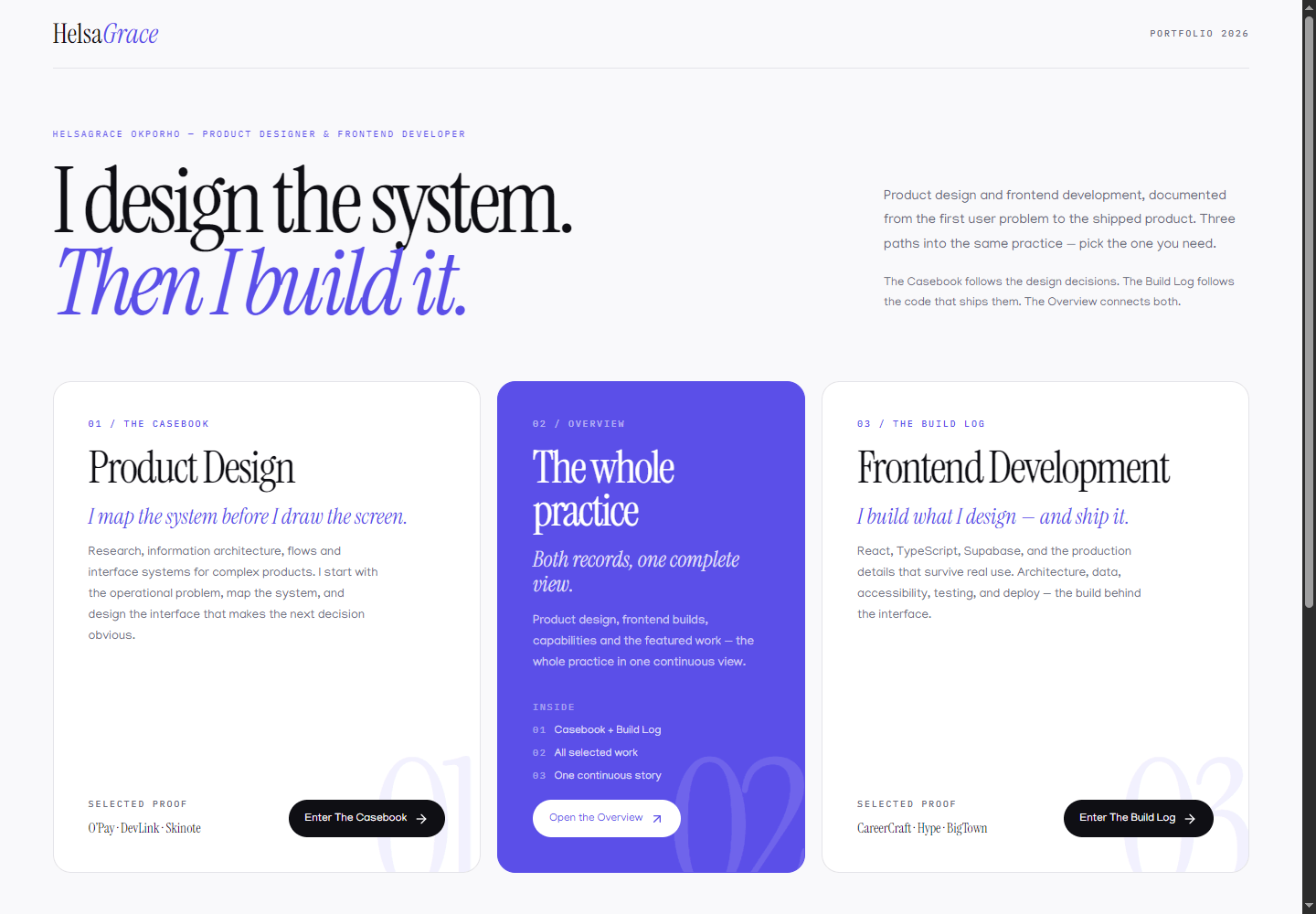
I map the system before I draw the screen.
Research, information architecture, flows and interface systems for complex products. I start with the operational problem, map the system, and design the interface that makes the next decision obvious.
The casebook
Product Design cases, read through the decisions that shaped them.
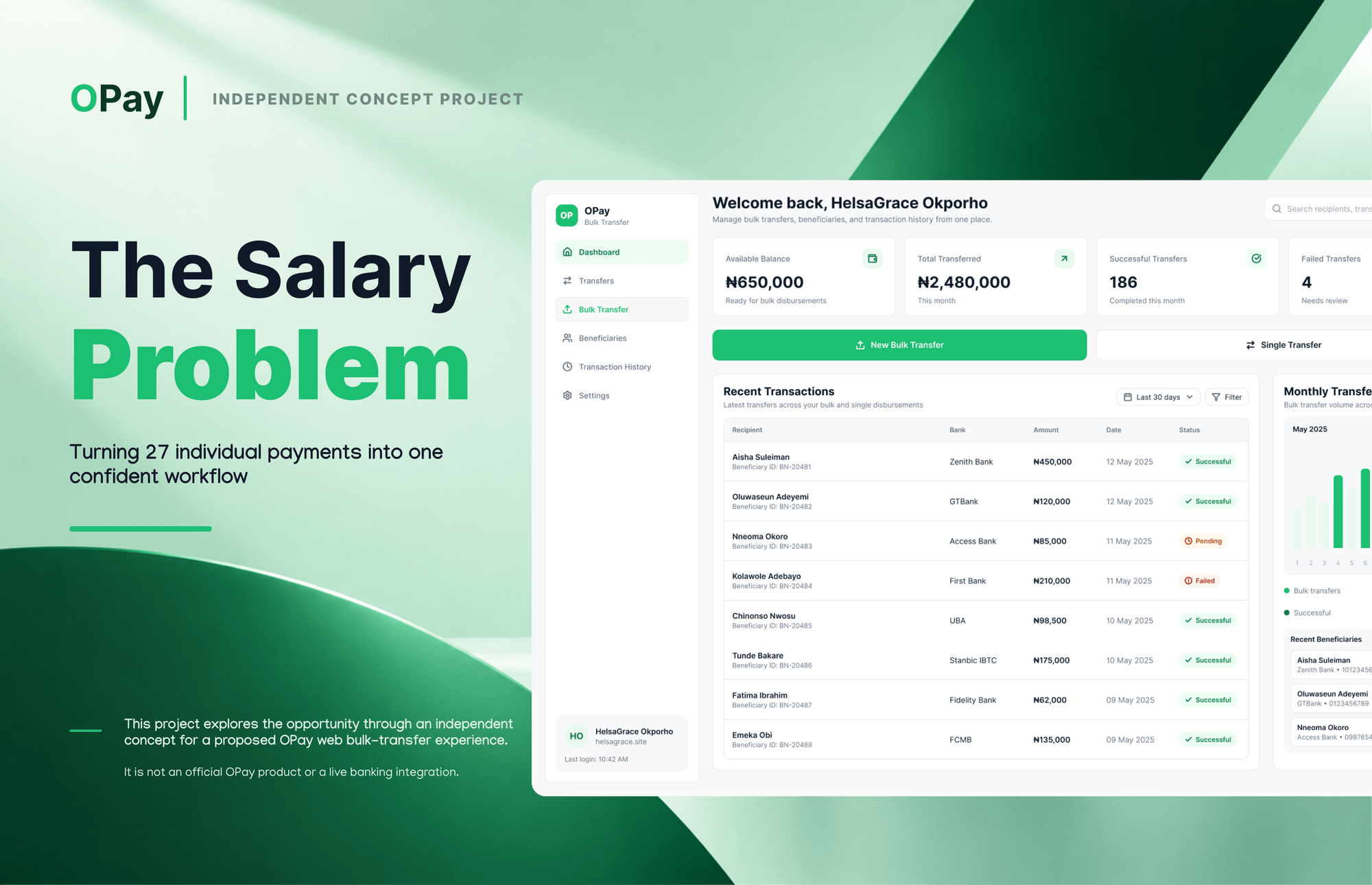
Designing confidence into OPay’s missing bulk-transfer workflow.
A proposed desktop workflow for OPay that turns 20–27 individual salary transfers into one reviewed, auditable batch — designed from the firsthand experience of processing monthly salaries.
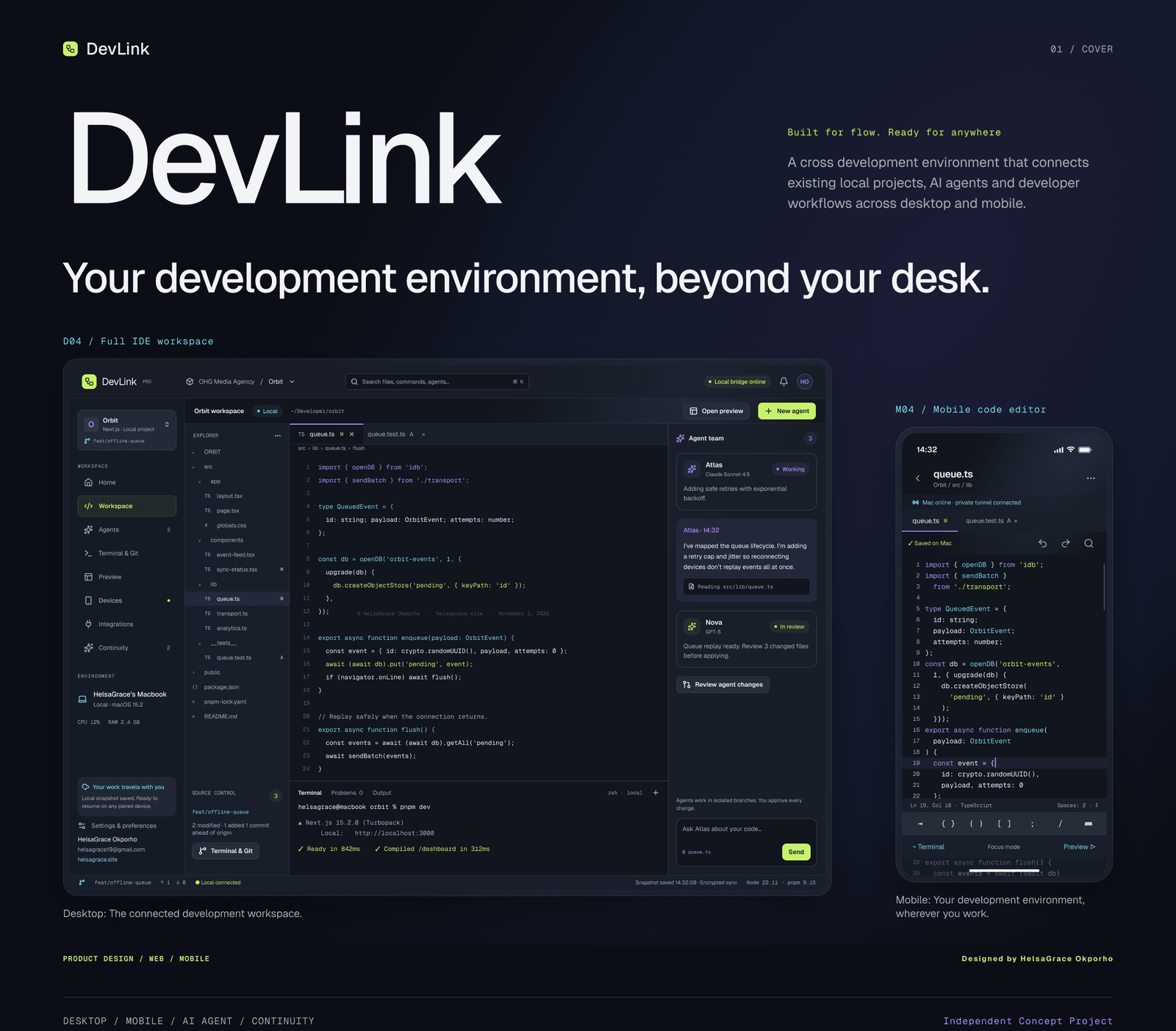
Designing continuity into a cross-device AI development environment.
A connected development environment that pairs a desktop host with a phone, keeps projects, agents and previews in reach, and lets developers keep working when the computer drops offline.
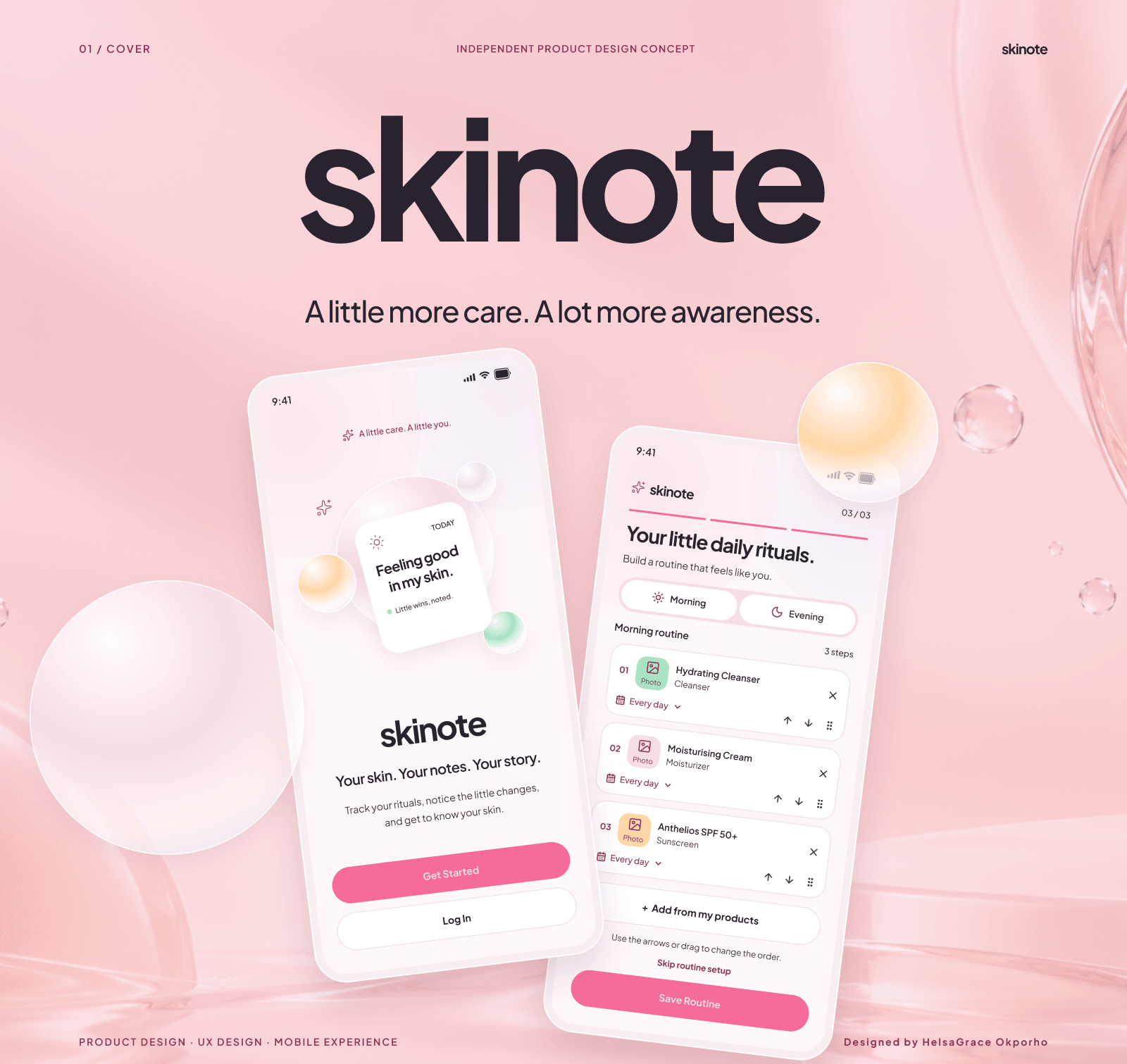
Designing a calmer way to build, follow and remember a skincare routine.
A mobile skincare companion that connects product organisation, routine tracking and skin journalling — designed around real routines rather than perfect ones.
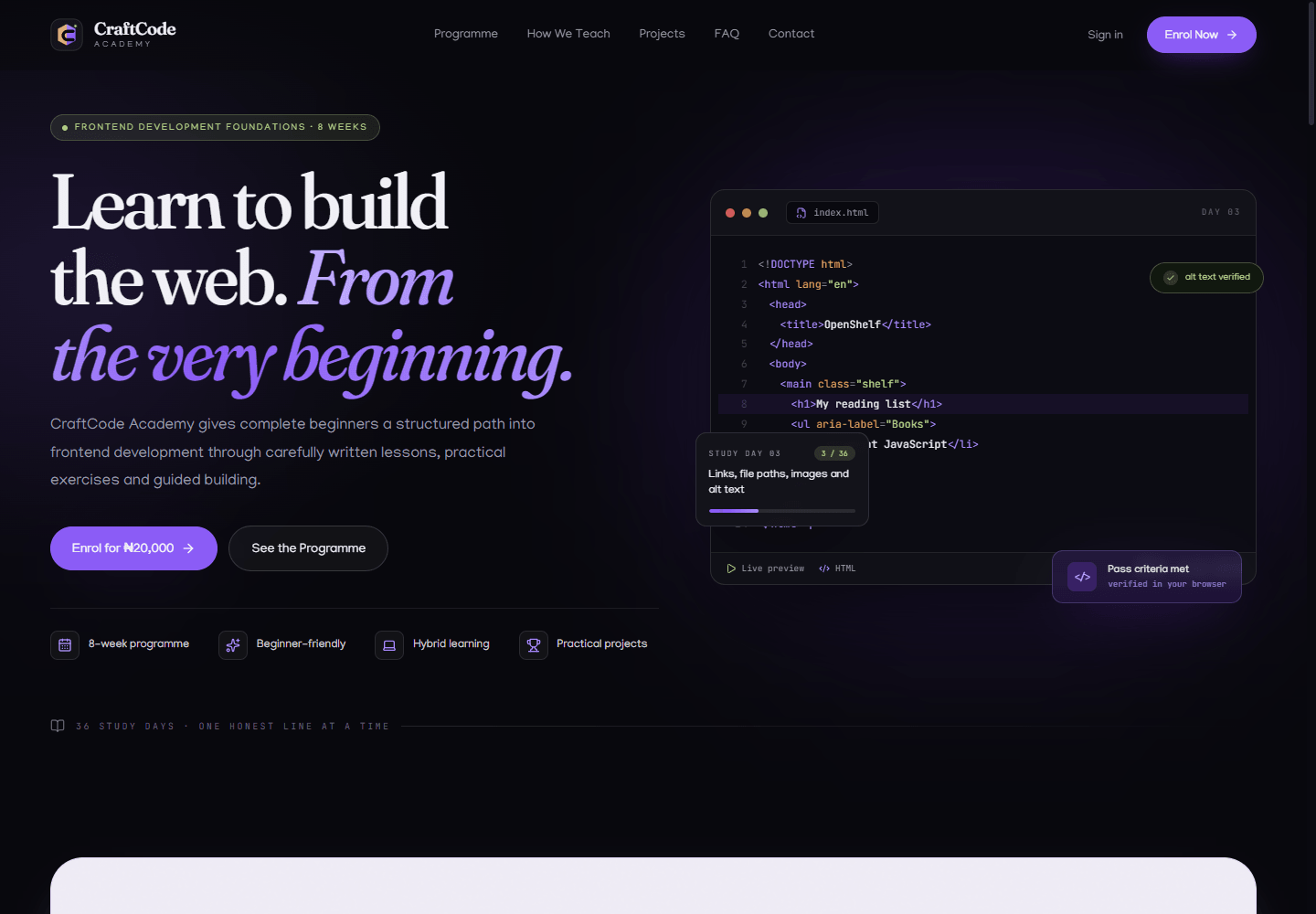
Designing an enrolment process that earns trust before it takes money.
A product design casebook for an eight-week beginner frontend academy in Nigeria: a reviewed enrolment pipeline, a 36-day teaching structure, and a learner and administrator platform designed to be operated honestly by a small team.
Designing a portfolio that shows the design decision and the build behind it.
A product design casebook for a personal portfolio built around two records: a Casebook for product design and a Build Log for frontend engineering, connected by an Overview and a shared visual system.
The full portfolio
05 product design cases and 07 frontend builds, plus the overview that connects them. The Casebook follows the design decisions; the Build Log follows the code that ships them.
“Design decides the system. The build keeps it honest.”
Inside
The practice
Four capabilities, each backed by a real product decision — not an adjective.
The practice
I map the operational system — roles, data, states and approval points — before I design the screen.
“On O’Pay, 27 individual transfers became one reviewed batch with a single approval point.”
I make complex information legible at the exact moment a person has to make a decision.
“Recipient issues surface before authorization, not after the payment has already left.”
I design the sequence, feedback and error states that make a workflow feel inevitable.
“The review screen leads with exceptions and totals, not a wall of individual rows.”
I start with the business bottleneck, then decide what the product should and should not solve.
“The concept is deliberately scoped to payroll operations, not the entire payments platform.”
The approach
The same four moves on every product — from the first payroll problem to the reviewed batch.
Start with the operational bottleneck. O’Pay began with 27 salaries being moved as 27 separate transfers, one recipient at a time.
Import, validate, review, authorise, record. Every stage, exception and approval point is mapped before a screen is drawn.
The review screen leads with exceptions and totals, not a wall of rows. The interface follows the decision, not the data model.
Test the workflow with the people who manage multiple payments. A concept is only useful when it survives the real operation.
About the designer
I'm HelsaGrace Okporho, a product designer based in Delta and Port Harcourt, Nigeria. I came from product management, which means I understand what is broken before I open Figma.
My work starts with the system: who the users are, what data exists, and what each role can see. Then I design the flows and the interface that make it legible.
I design for the whole product — the happy path, the admin console, the empty state, and the edge case. And because I build what I design, the handoff is short.
The designer
HelsaGrace
Product Designer
The Casebook / 2026
The next case
I take products from the first user problem to a build-ready interface. Tell me what you’re making.
Open to remote roles worldwide · WAT (UTC+1)
Send a message
Choose a quick reply to start, then add the detail. Messages come to me directly.