03 / The Build Log / Community marketplace
Borrowly
A prototype where the pricing rules cannot disagree
A React front-end prototype with one price calculation shared across eight screens, local state and no backend.
- Role
- Frontend Development
- Category
- Community marketplace
- Status
- Prototype
- Year
- 2026
[build: borrowly-build-log] — Prototype
01 / The brief
Walk the full borrowing loop without a backend
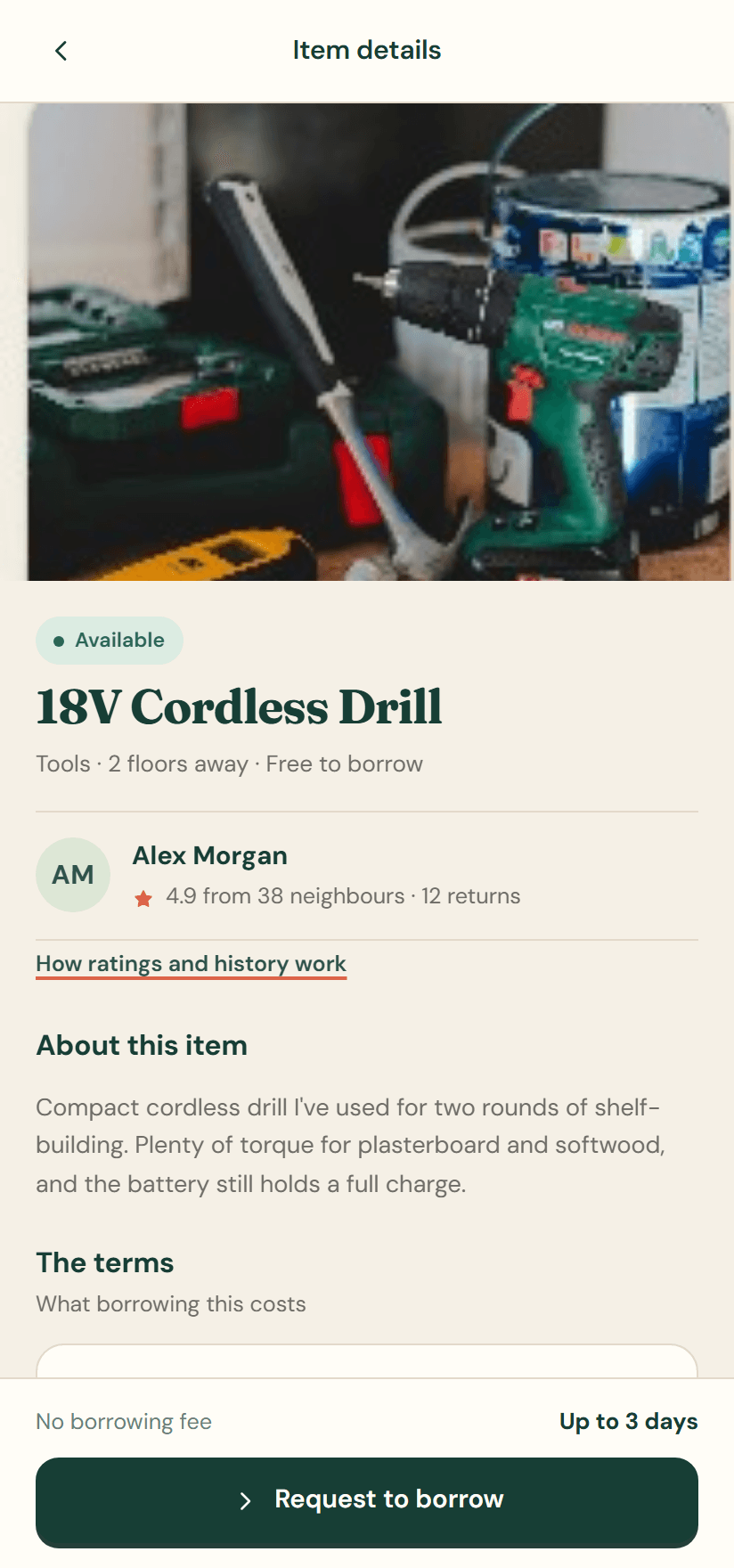
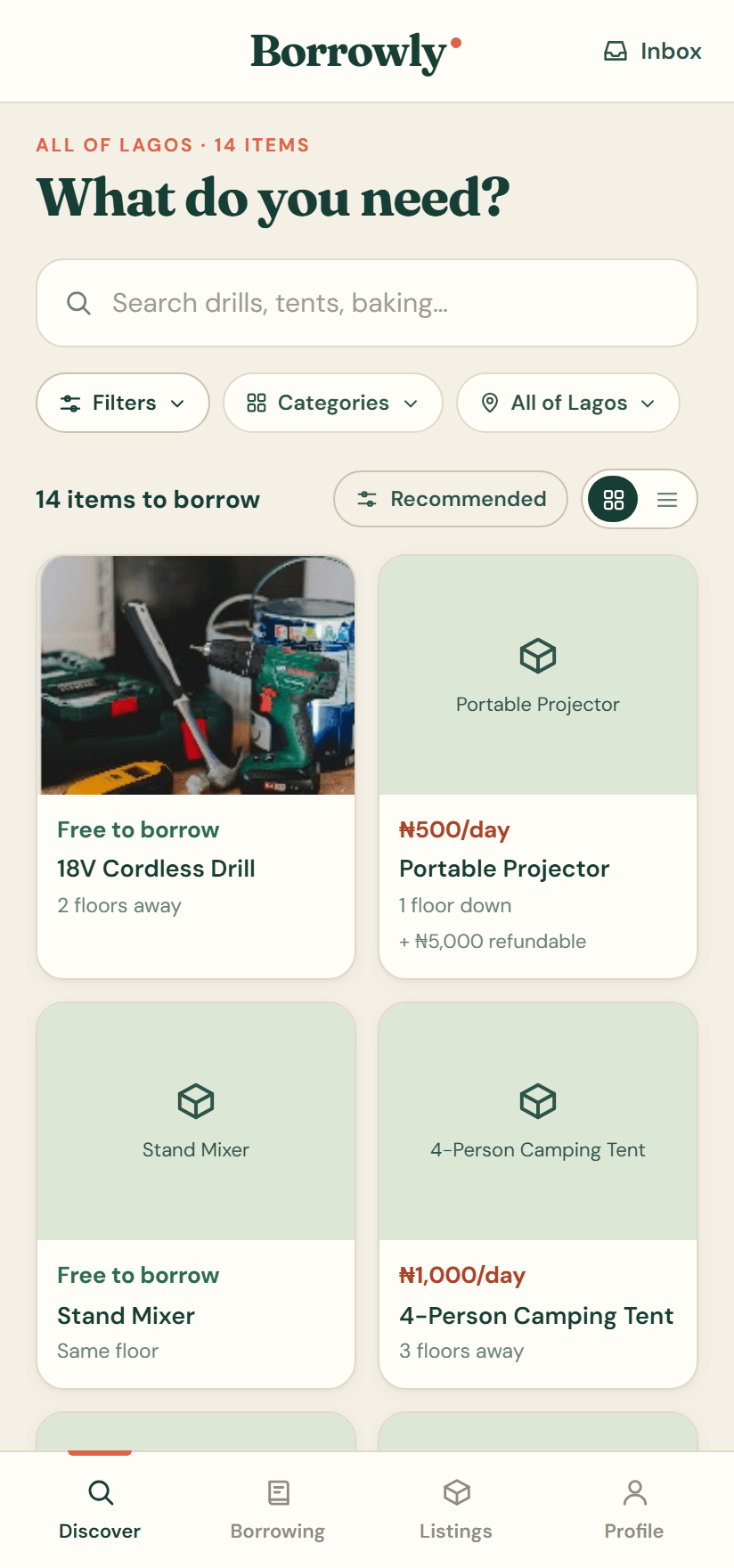
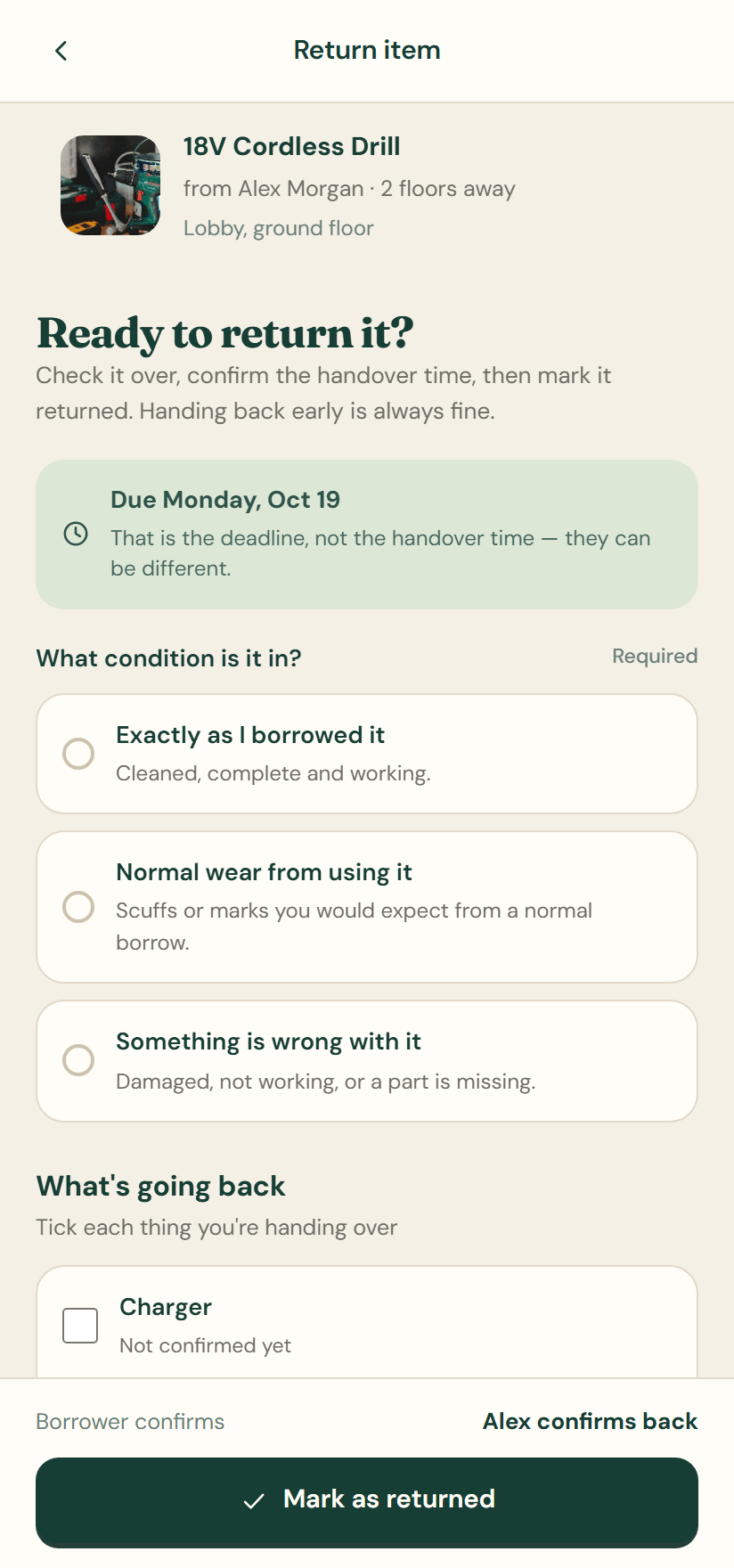
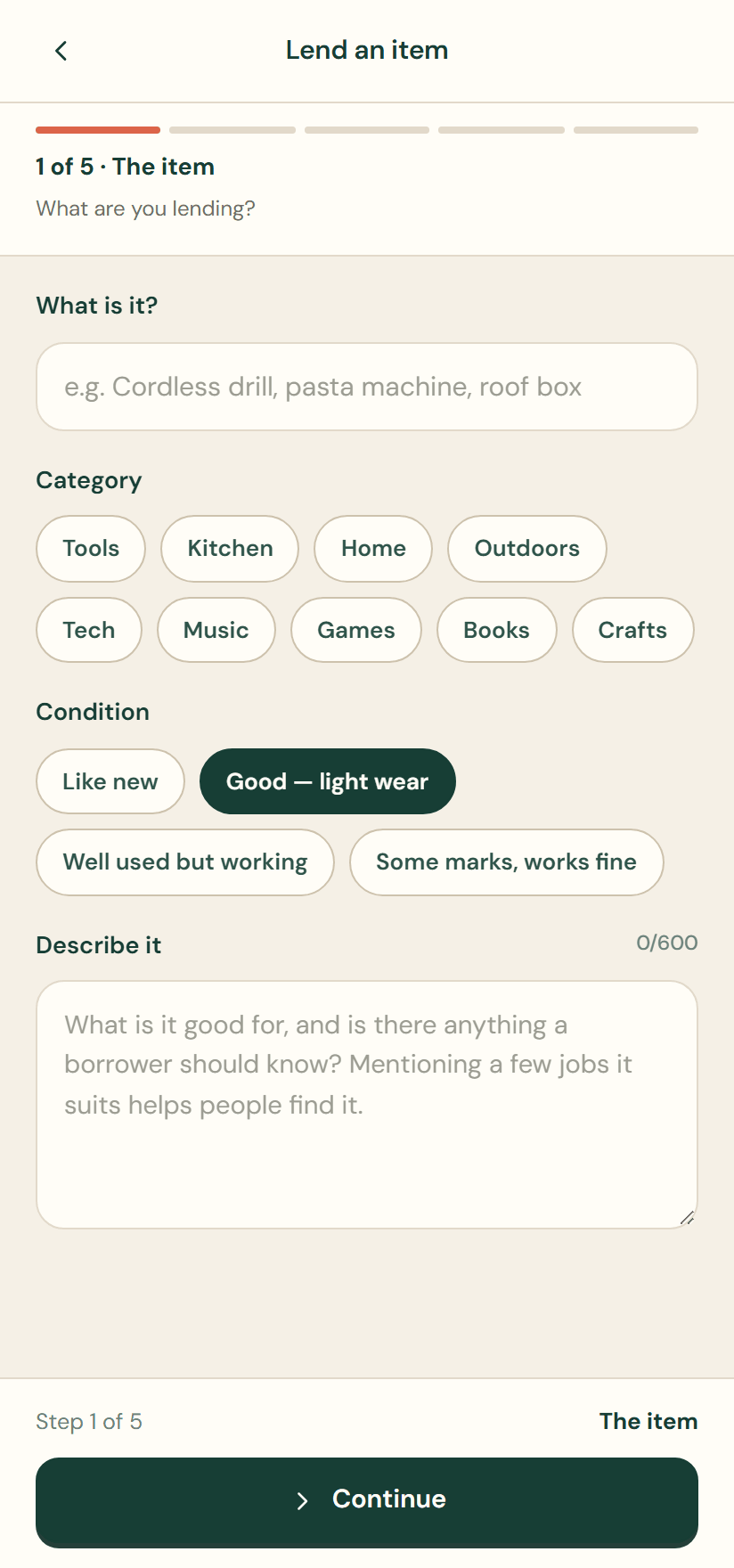
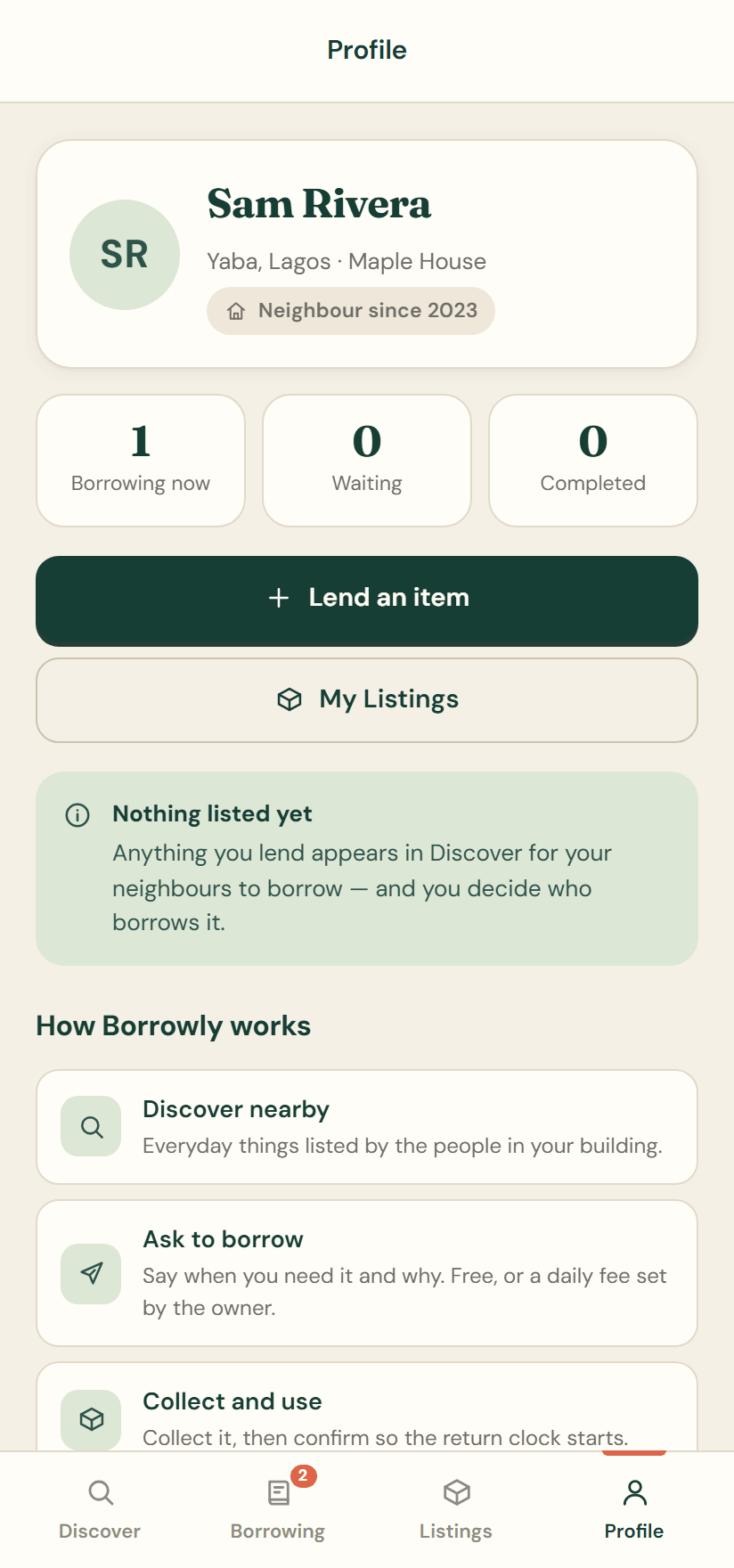
Borrowly is a neighbourhood marketplace for borrowing everyday things. The prototype needed to cover the whole loop — discover, item detail, request, confirmation, active borrowing, extension, return and the owner-side listing flow.
The goal was not to fake a production backend. It was to make the product logic visible enough to test whether the model makes sense.
“A deposit is not a fee — and the interface has to say so.”
02 / Architecture
React, TypeScript and a single source of truth
The prototype is React 19, TypeScript, Vite and Tailwind v4, with local state and localStorage. There are no payments and no messaging backend; the other side of a request is automated so the journey can be walked end to end.
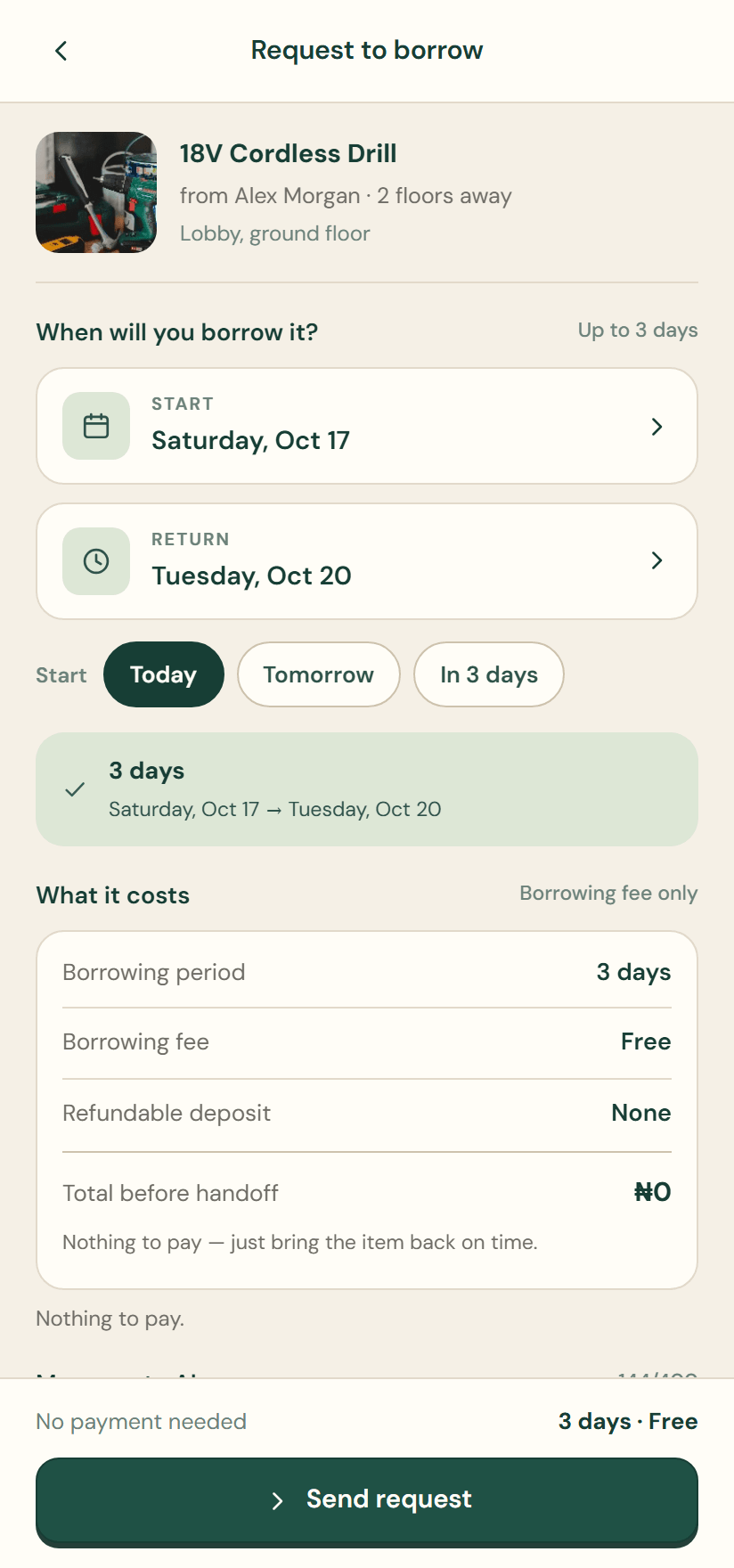
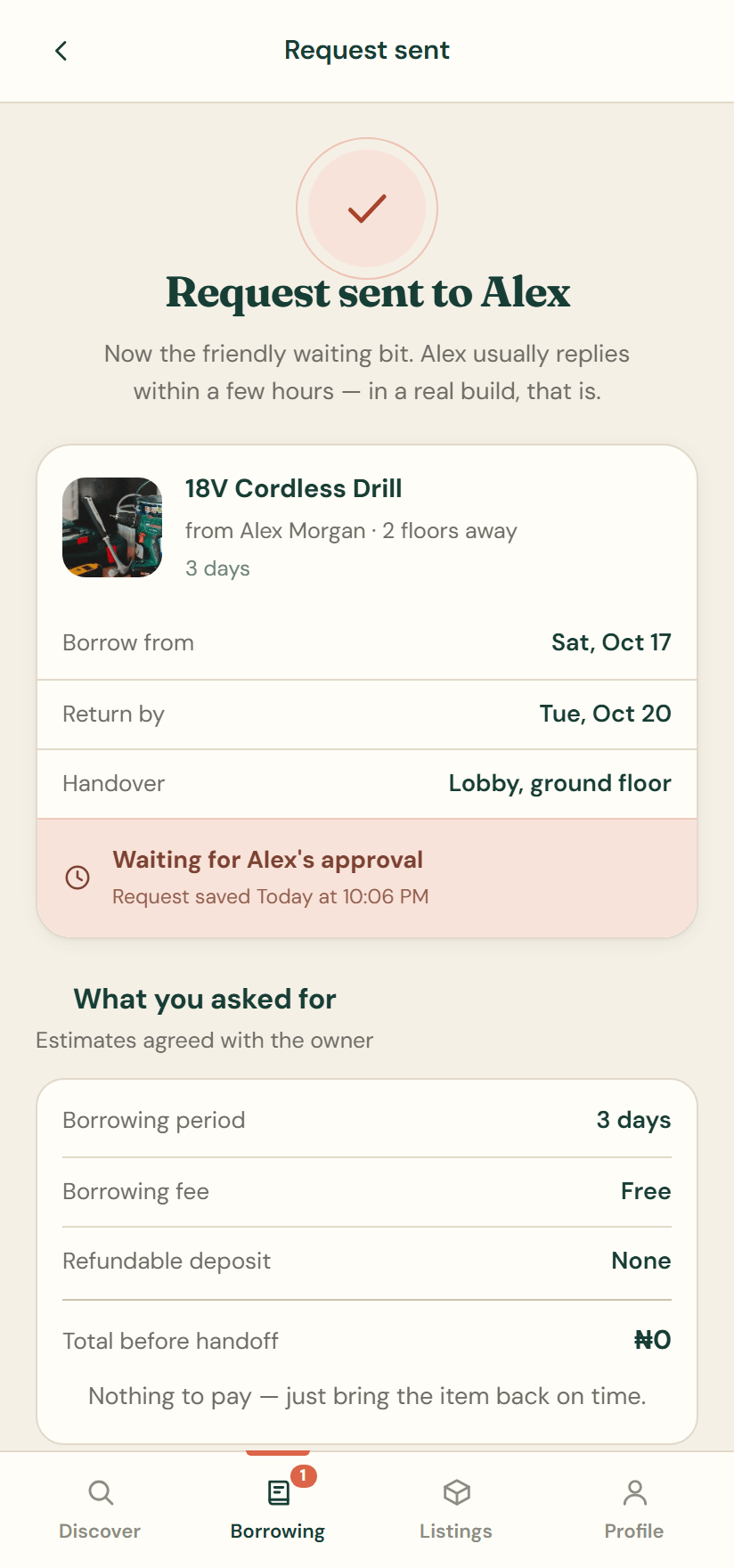
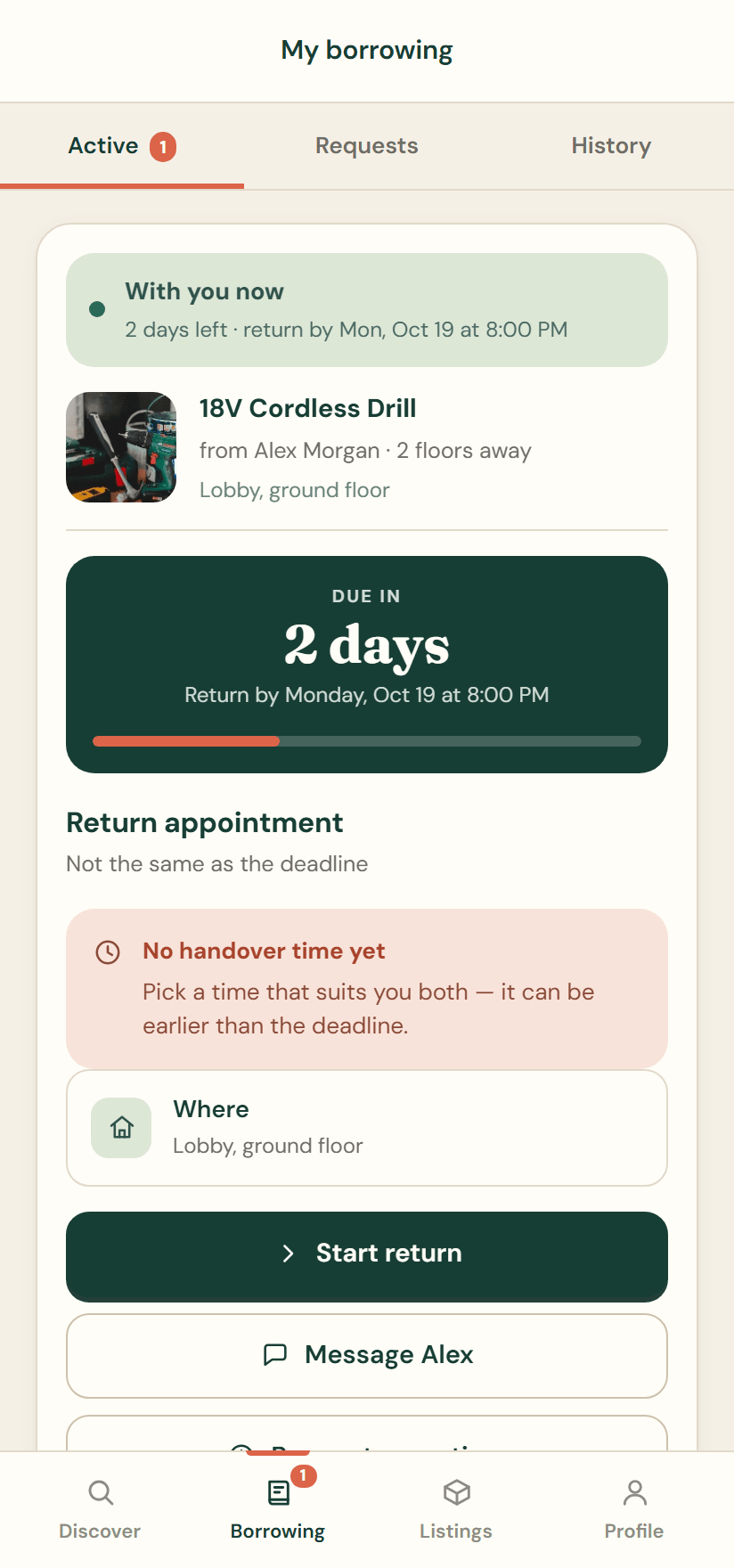
The important architectural decision is that the price calculation lives in one place. The listing form, item page, request summary, active loan and extension sheet all read from the same date utilities.
- One price calculation shared across every screen
- Free and paid lending in the same model
- Deposits are a separate line, never folded into the fee
- Location is a neighbourhood, never an address
03 / System map
Borrowing loop
Discover
Area + distance
Request
Dates + price
Approve
Owner decision
Active loan
Return deadline
Return
Condition check
One price rule feeds every screen. The deposit is always a separate line because it is returned, not spent.
04 / The hard parts
A deposit is not a fee, and a neighbourhood is not an address
The product had to avoid borrowing the language of checkout — escrow, guarantees, delivery — from marketplaces built for buying. A deposit is refundable by agreement between two people, and the interface must never imply Borrowly holds or settles the money.
Location is a manually chosen area plus a distance tier, matched against the neighbourhood each listing declares. No location permission is requested, and no distance in metres is invented.
05 / The proof
An interactive prototype, not a pretend product
The prototype covers eight screens and the full borrowing loop. It is honest about what it is: a front-end prototype with one account and local state, built to test the model before investing in a backend.
- Eight screens covering discover → request → borrow → return → lend
- One card, one pill, one sheet, one calendar, one price line
- Free listings never show a fee or a deposit
- Paid listings use the same date maths everywhere
06 / Selected screens
Inside the build
07 / What I’d change
The next step is research, not more screens
The honest next step is testing whether people will actually charge a neighbour, and whether a refundable deposit reads as fair or as suspicion. Those are research questions, not UI questions.
Next in The Build Log
CraftCode Academy
A React and Supabase platform for an eight-week frontend academy: a public programme site, a private receipt pipeline, a learner area with lessons and submissions, and a 39-table administrator console with row-level security and audit trails.